
Searching Hancock County Criminal Dockets
Start with Indiana MyCase, the main channel for public, nonconfidential Hancock County criminal docket data. Do you know a cause number, citation number, or cross-reference number? Choose the “By Case” option. Enter one key. A party search works differently. Give a last name plus one narrowing field, such as a first name, middle name, or date of birth. From there, set the court to Hancock County and the category to criminal. Then review status and filing dates. Searching by exact cause number gives the cleanest results for a court docket lookup.
- Open MyCase and select case or party search.
- Enter one identifier and filter to Hancock County criminal cases.
- Match the court, case style, filing date, and status.
- Open the summary and read the dated CCS entries.
- Ask the Clerk for an official copy or missing public item.
The Clerk offers other paths for a docket search. Visit the counter at 9 East Main Street, Room 213, Greenfield, call 317-477-1109, or send a written request. Office hours run weekdays from 8 a.m. to 4 p.m. Older gaps, current balances, and certified copies all belong with the Clerk.
Hancock Criminal Cause Numbers
30C01-YYMM-XX-######, 30D01-YYMM-XX-######, and 30D02-YYMM-XX-###### are the patterns you will see on a Hancock County criminal docket. The four groups in an Indiana cause number identify the court, the filing year and month, the case type, and the sequence. Those three prefixes point to Circuit Court and Superior Courts 1 and 2. The Administrative Rule 8 source lays out the numbering system in full.
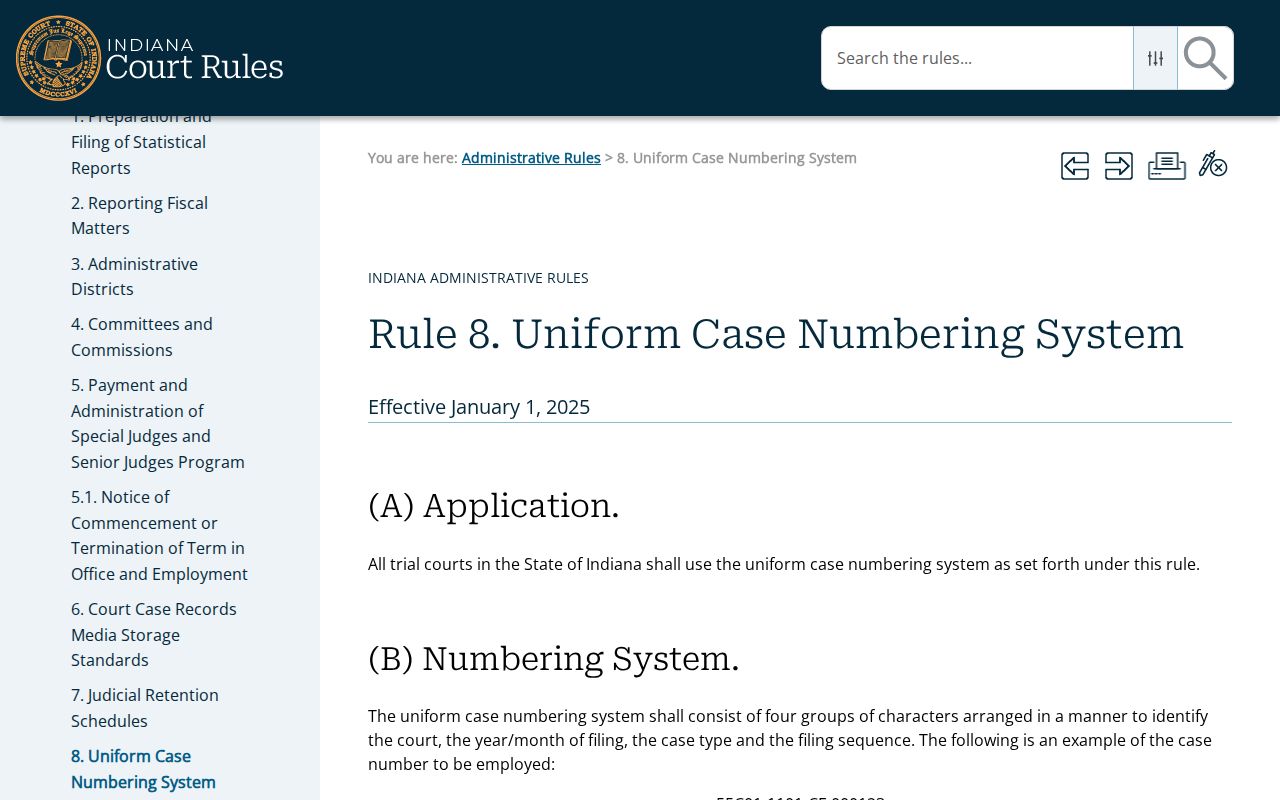
The court code matters most when a case transfers. A move between Hancock courts can change the first group of the cause number, while the filing sequence usually stays put. Search both the old and current forms if a docket lookup comes up empty.
Inside a Hancock County Criminal Docket
Read the header before anything else in a CCS. A public summary may list the cause number, court, style, filing and status dates, party roles, charges, bonds, financial entries, hearings, orders, disposition, and appeal indicators. The docket is a sequence of events. It is not a verdict. Which links appear depends on case type and access level.
| Charge | A filed allegation, not proof of guilt. |
|---|---|
| CCS event | A filing, notice, hearing, order, payment, or court act. |
| Setting | A scheduled event checked against current notice. |
| Disposition | The recorded outcome of a count or case. |
| Sentencing order | A final order that may be publicly linked. |
A charge is not a conviction. Closed status does not erase the case history. Indiana’s matrix often shows a final sentencing order while other filings stay offline, so a missing PDF does not mean a missing filing.
Hancock Criminal Filing Channels
Searching a docket and filing into one are separate acts. Attorneys file through Indiana certified providers, while the public reads permitted data in MyCase. Hancock allows self-represented filers to use the counter, mail, or fax in stated circumstances. Email filings are barred. Every filing needs a cause number. The Indiana e-filing overview describes the workflow.
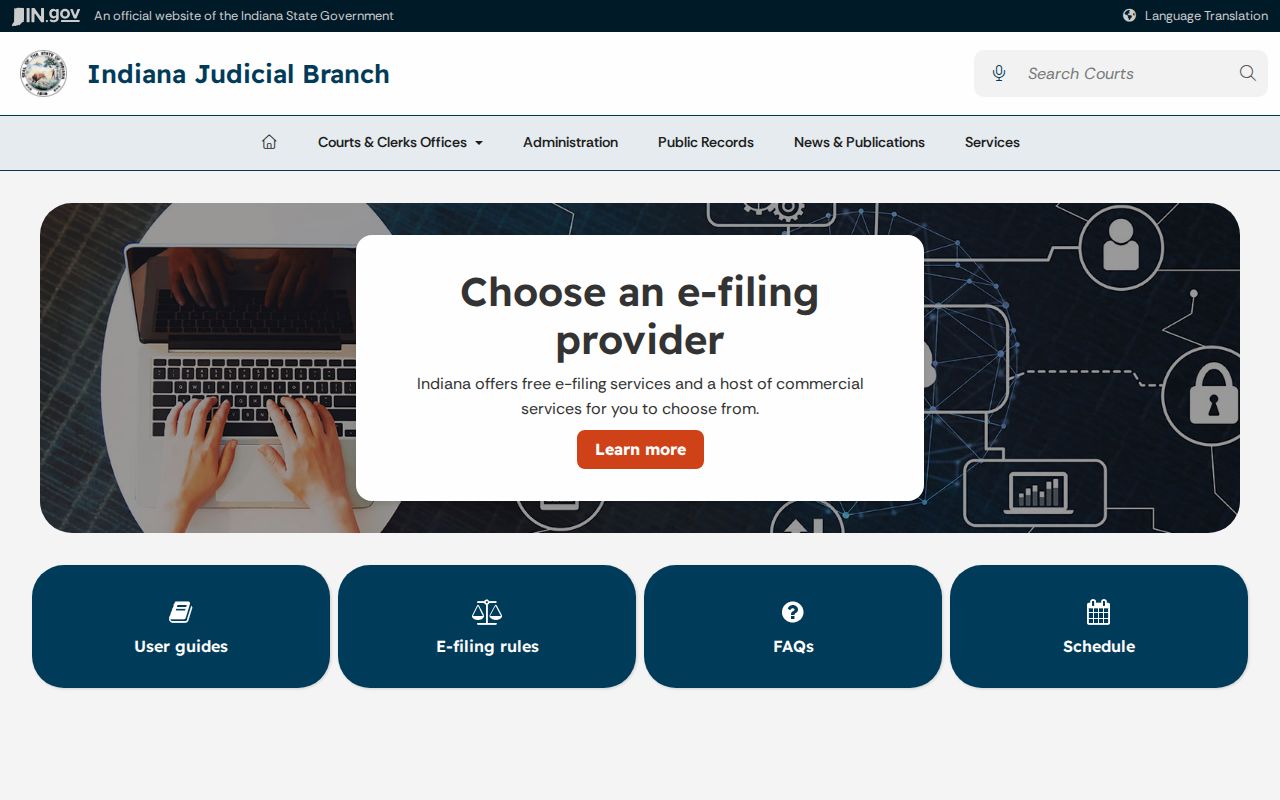
E-filing feeds the case management system but does not make every document public. The state also lists certified e-filing providers.
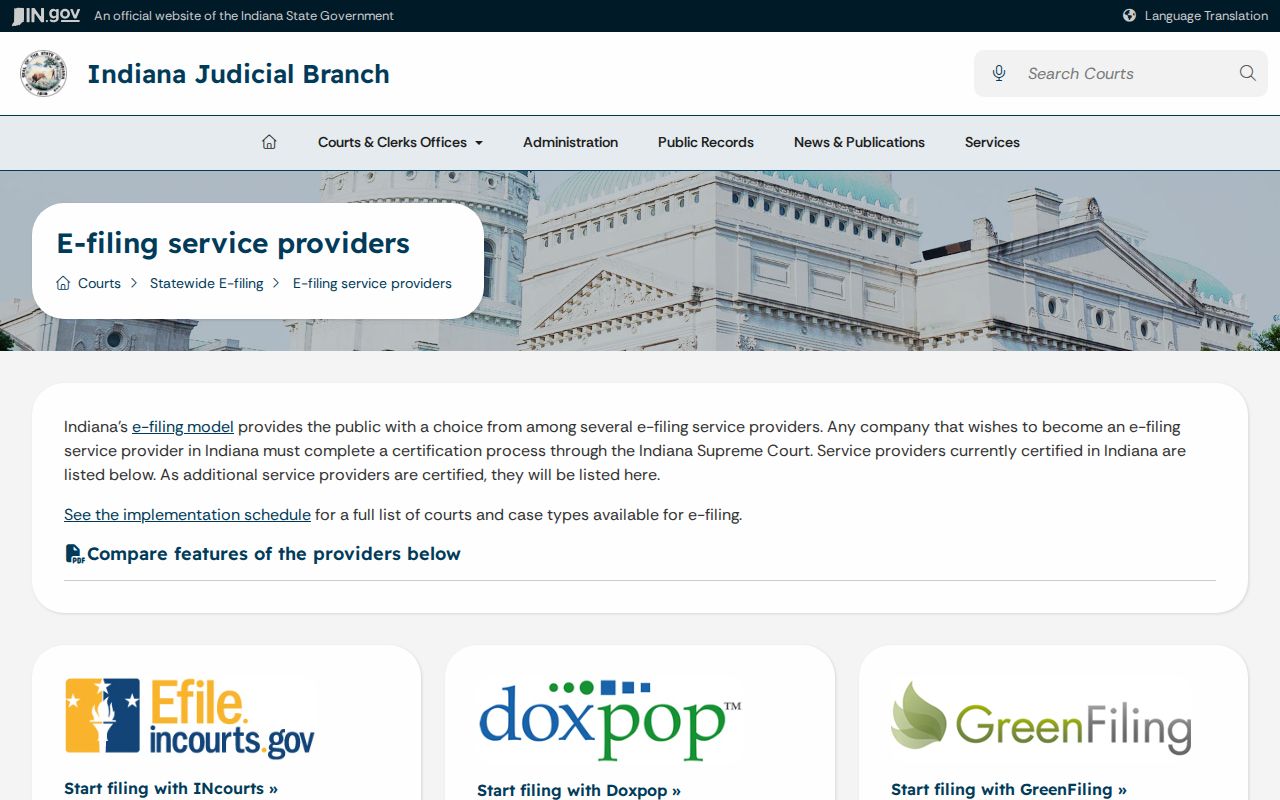
Provider support handles filing technology only. For a public docket search or copies, MyCase and the Clerk remain the paths.
How a Criminal Case Moves
The Hancock County criminal docket often reads: Filing → Initial hearing → Pretrial → Plea or trial → Disposition → Sentencing. Not every case follows each step. Motions, notices, resets, bond acts, and orders can appear between them.
Treat cash-bond entries with care. Hancock rules describe how cash bonds apply to fines, costs, fees, restitution, and some other obligations after disposition. That entry is not a new charge or a certain current balance. Confirm finances with the Clerk. Some ticket-linked matters appear in Indiana ePay.
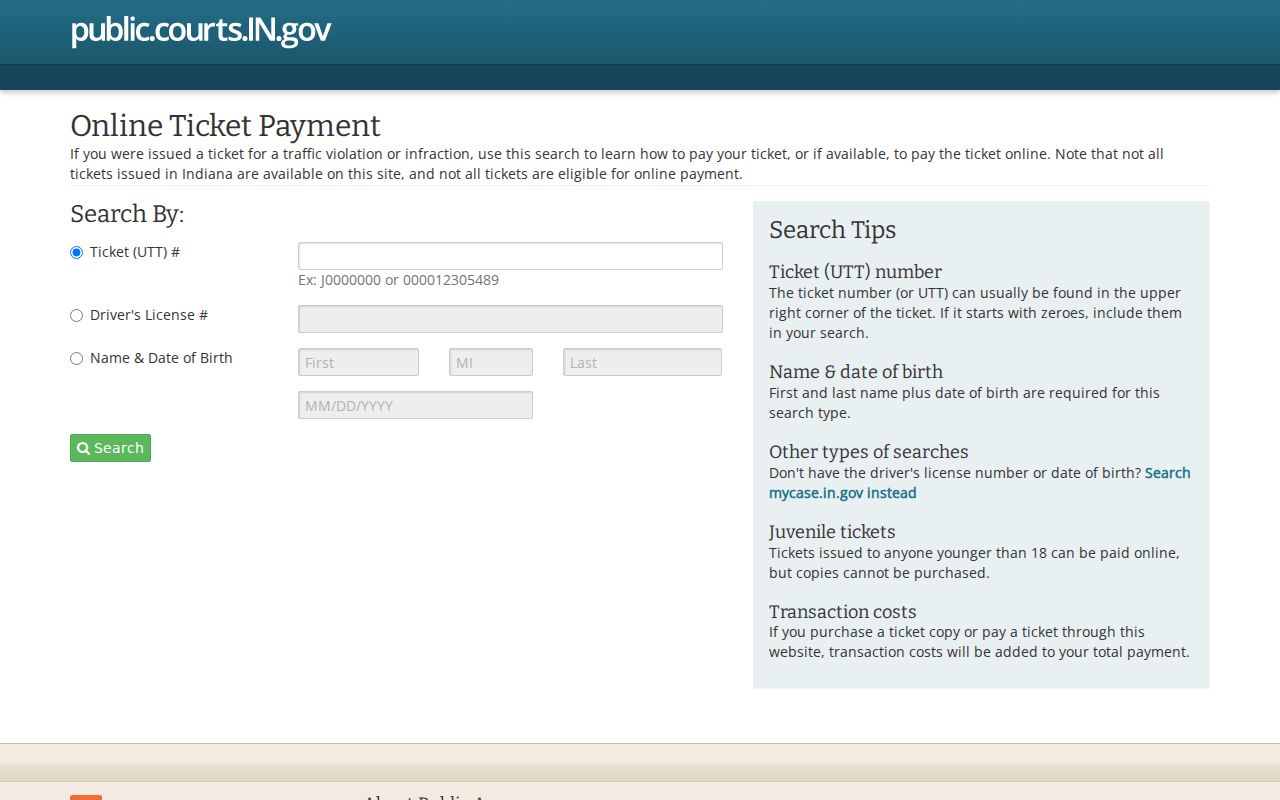
ePay is a payment lookup, not the full CCS. MyCase carries the public event trail for the docket.
Hancock Criminal Docket Courts
Superior Court 2, 30D02, receives misdemeanors, infractions, ordinance violations, and Level 6 felonies. Levels 1 through 5 route between Circuit and Superior 1. The split turns on the earliest alleged offense date. Odd dates go to Circuit, even dates to Superior 1. Allegations spanning a period follow month rules.
| Court | ID | Allocation |
|---|---|---|
| Circuit | 30C01 | F1-F5 and murder under alternating rule |
| Superior 1 | 30D01 | F1-F5 under alternating rule |
| Superior 2 | 30D02 | F6, CM, IF, OV, and assigned MC |
When lower counts join it, the highest felony controls the assignment. Joinable co-defendants stay together, and a same-facts refile returns to the first court. Those rules explain many surprising court assignments.
Hancock Criminal Docket Codes
Case-type codes sharpen any Hancock County criminal docket search. The current felony levels run from F1 through F6. CM means criminal misdemeanor, MC means miscellaneous criminal, and MR means murder. Older files can carry historical codes such as CF, FA, FB, FC, or FD. Read an older label under the rules and law in force for that case. Don’t force it into a current felony code. Infraction code IF and ordinance code OV route to Superior Court 2. Neither equals a criminal conviction. The CCS text, the charge classification, and the final disposition show what actually happened. A warrant or capias indicator also deserves direct court confirmation. An online flag alone is not an official, current warrant check.
Older Hancock Criminal Records
Odyssey identifiers in Hancock County went live in 2013. That year is not a wall where older criminal records stop. A case filed decades back may carry a legacy cause number. It may hold converted events, microfilm, or papers that only the Clerk still holds. MyCase help itself cautions that older material may sit offline. So try spelling and number variations in your docket search first. Then contact the Clerk with the names you know, the date range, the court, and any old number. Let the office tell you what exists rather than assuming the file was destroyed.
Describe the item you want with reasonable particularity in a public-record request. Say plainly what you seek. It may be the CCS, an order, a judgment, or some other public document. Hancock charges $1 per page for ordinary and microfilm copies, and certification adds $3. Before you mail a money order and a self-addressed stamped envelope, ask Public Access for the page count. Ask also for payment instructions.
Physical evidence works differently than the electronic or paper CCS. Local rules fix retention and disposal periods, and notice duties attach to some evidence. A single docket entry can outlive a bulky exhibit. If you want an old exhibit, ask whether it remains in court custody. A CCS reference alone does not promise the object can still be retrieved.
Hancock Criminal Payment Records
For criminal payments, Hancock lists AllPaid with Pay Location Code 6285. The vendor can handle lower criminal, ordinance, and infraction payment workflows, and the AllPaid service shows the vendor interface.

A receipt does not replace the docket, set a hearing, or prove a case closed. Confirm the CCS and balance.
Sealed Dockets and Public Access
Access Rule 4 opens with a general right of access. Rule 5 then lists what is excluded. A Hancock County criminal docket can omit sealed material. Granted expungements, protected facts, and documents barred by law or court order can drop out too. What you can reach over the internet stays narrower. It is narrower than what you can see at the courthouse.
Not found does not mean nonexistent.
Check the number, court, dates, and filters, then ask whether a conversion gap or protected status applies.
Eligible parties may need to show photo ID. When a party cannot appear, Hancock's mail route asks for a notarized raised-seal ID copy. Rule 9 offers a petition process for excluded records. The law must allow it. Staff will walk you through the filing steps. The court alone decides access.
Hancock Criminal Docket Verification
Before you rely on a Hancock County criminal docket entry, compare four things. Check the cause number, court identifier, event date, and final disposition. Check any linked order against the CCS text itself. Does a balance, a warrant term, a hearing, or an access status matter right now? Call the court or Clerk. Use the one that holds the original record. MyCase works well as a public index. The official record still lives with the maintaining court.
This check matters most when names are similar or a case has moved. It also guards against classic docket reading errors. One is treating a charge as an outcome. Another is mistaking an event filing date for a hearing date. A third is reading a vendor payment screen as proof the whole case has ended.