
Searching Hancock County Civil Dockets
Your first stop is Indiana MyCase. A cause number you already know gives the tightest match. No number? Search by last name with another allowed name field or a date of birth. You can also try a business name. Filter to Hancock County and pick civil, family, or probate as the matter requires. Use the status and filing-date limits to trim broad results.
- Select case or party search.
- Enter a cause number, person name, or business name.
- Choose Hancock County and the fitting category.
- Confirm court, case type, file date, and style.
- Read the CCS and request missing public documents from the Clerk.
MyCase stops at 1,000 results. You may drop hyphens and leading zeroes from a cause number. A transferred case can carry a changed court identifier, so keep any older number from notices. Fallback options include the Clerk counter. The 317-477-1109 phone line works too, as does the mailed Request for Information form and in-person public access. Certified copies come from the Clerk.
Hancock Civil Case Codes
Case codes tell you what kind of civil docket you have found in MyCase. They say nothing about outcome. Circuit and Superior 1 split most civil work by random assignment. A related pending case requires manual assignment instead. Small claims go to Superior 2. The court may also reassign matters for workload or convenience.
- CC
- Civil collection.
- CT
- Civil tort.
- PL
- Civil plenary, a general civil proceeding.
- EV
- Petition for eviction.
- SC
- Small claim assigned to Superior Court 2.
- DN / DC
- Domestic relations without or with children.
Two placeholder patterns, 30D01-YYMM-CT-###### and 30C01-YYMM-PL-######, show the form of a civil cause number without matching any real case.
Inside a Hancock County Civil Docket
Read a civil CCS top to bottom. The order runs from court and style to file date, party roles, service and appearances, pleadings, motions, hearings, orders, judgment, and post-judgment events. Financial and appeal entries may follow. Remember that a civil event can stay public even when its pleading has no download link.
| Case header | Court, cause number, type, status, and file date. |
|---|---|
| Party role | Plaintiff, defendant, petitioner, respondent, creditor, or debtor. |
| CCS event | Dated text for a filing, service, setting, order, or judgment. |
| Document link | A permitted online copy, controlled by code and access level. |
| Financial entry | Costs, payment, or judgment data that may need Clerk confirmation. |
What you pull up online is not a certified copy of anything. If your purpose calls for an authenticated record, ask the Clerk to issue one. And note that public access does not mean every pleading, exhibit, transcript, or account can be reached remotely from a docket entry.
Hancock Civil Access Framework
Indiana court-record rules govern both online and courthouse access to Hancock County civil records. The official Access to Court Records rules index states those requirements and is the place to start.
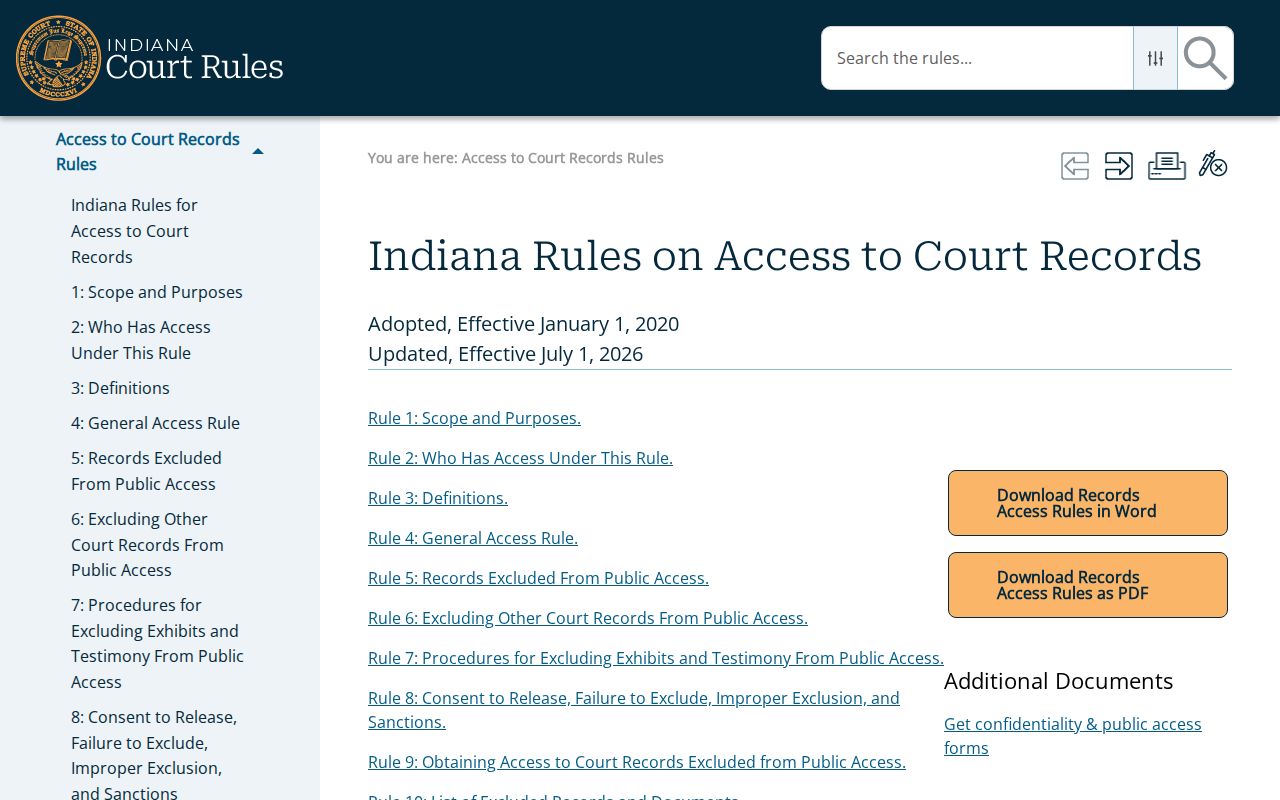
The current framework took effect July 1, 2026. It separates a public court record from a record approved for remote viewing, and Access Rule 5 lists the excluded categories.
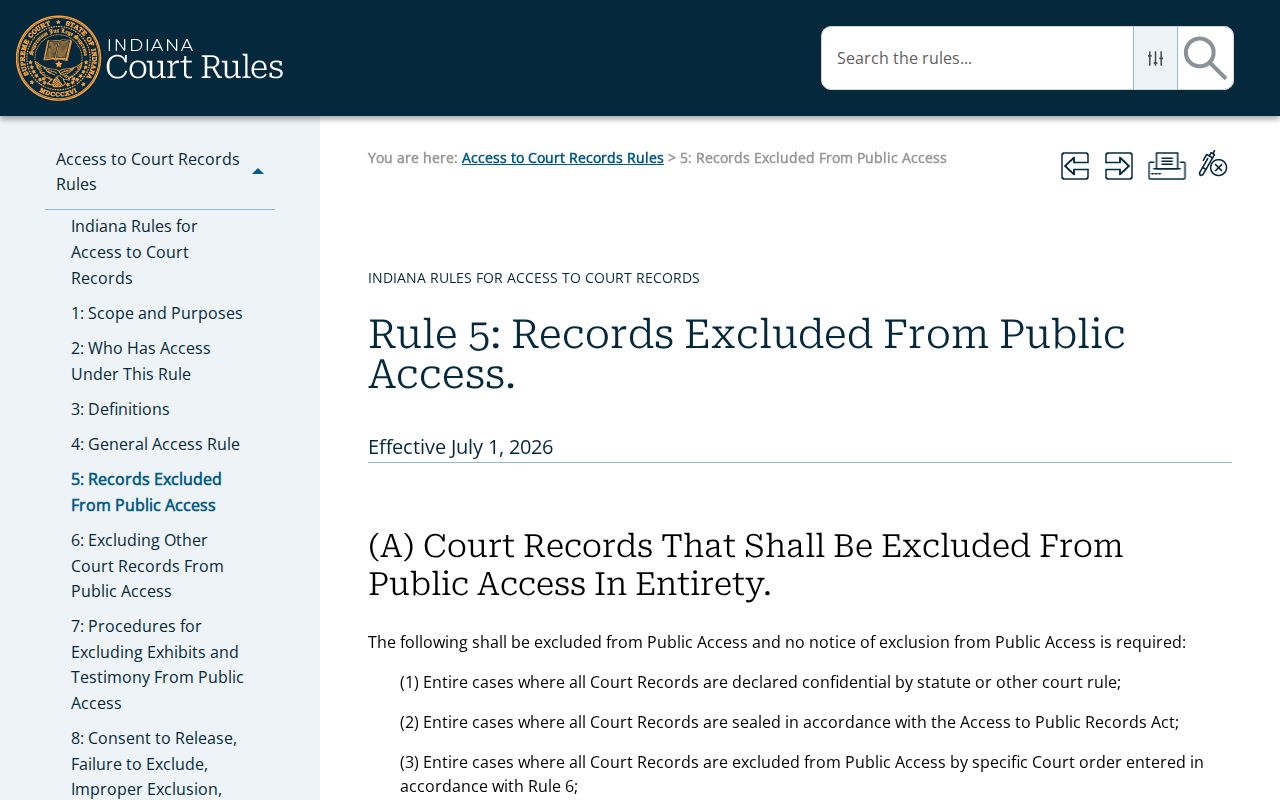
Some cases in the Hancock County civil docket stay off limits, including family, juvenile, mental-health, protection-order, and sealed matters. When a case lookup turns up nothing, that simply reflects restricted access, not the absence of a proceeding.
Civil Case Types on the Docket
Hancock County civil dockets span collection, tort, plenary, mortgage foreclosure, eviction, domestic relations, support, visitation, protective, mental-health, administrative-review, estate, trust, and guardianship matters. Check the case code and court assignment. That habit keeps you from mixing records of people with similar names.
| Branch | Examples | Initial court |
|---|---|---|
| General civil | CC, CT, PL, MF, EV | Circuit or Superior 1 |
| Family | DN, DC, RS, GV | Circuit or Superior 1 |
| Probate | EM, ES, EU, GU, GM, TR | Circuit or Superior 1 |
| Small claims | SC | Superior 2 |
Small claims in Indiana cap at $10,000 for cases filed on or after July 1, 2021. State rules, current as written, govern venue and practice. Hancock County Clerk staff can hand you local forms, though they cannot give legal advice.
Transferred Hancock Civil Cases
A related pending matter can override Hancock's normal random assignment between Circuit and Superior 1. When the local related-case rule applies, the Clerk manually assigns the newer filing. So compare party roles, case type, and cross-reference indicators. Do not treat two matching names as unrelated dockets.
A transfer inside Hancock County can change the court-identifier group of the cause number. Administrative Rule 8 normally preserves the filing sequence. Keep both identifiers when you contact the Clerk. Also check the CCS for a transfer entry. An exact search on an old notice can fail. That small number change explains it, even while the civil case stays active.
Hancock Civil Exhibits After Judgment
The docket can stay available after a physical exhibit becomes eligible for return or destruction. Under Hancock local rules, some non-letter-size civil exhibits may be removed four months after decision when no appeal controls. An appeal extends retention. Small-claims exhibits that can be scanned may be discarded after scanning unless return is requested in time, and non-scannable items must be removed within 45 days after judgment.
So a CCS reference proves a filing or admission. It does not prove the object still sits in storage. Ask the maintaining court about custody and deadlines. Keep your contact information current. Local notice about evidence disposal may arrive by mail or email.
Hancock Civil Filing Privacy
Filing a document does not make every attachment public. Indiana Trial Rule 5 governs filing and confidential-information handling, and the official Trial Rule 5 text lays out that framework.
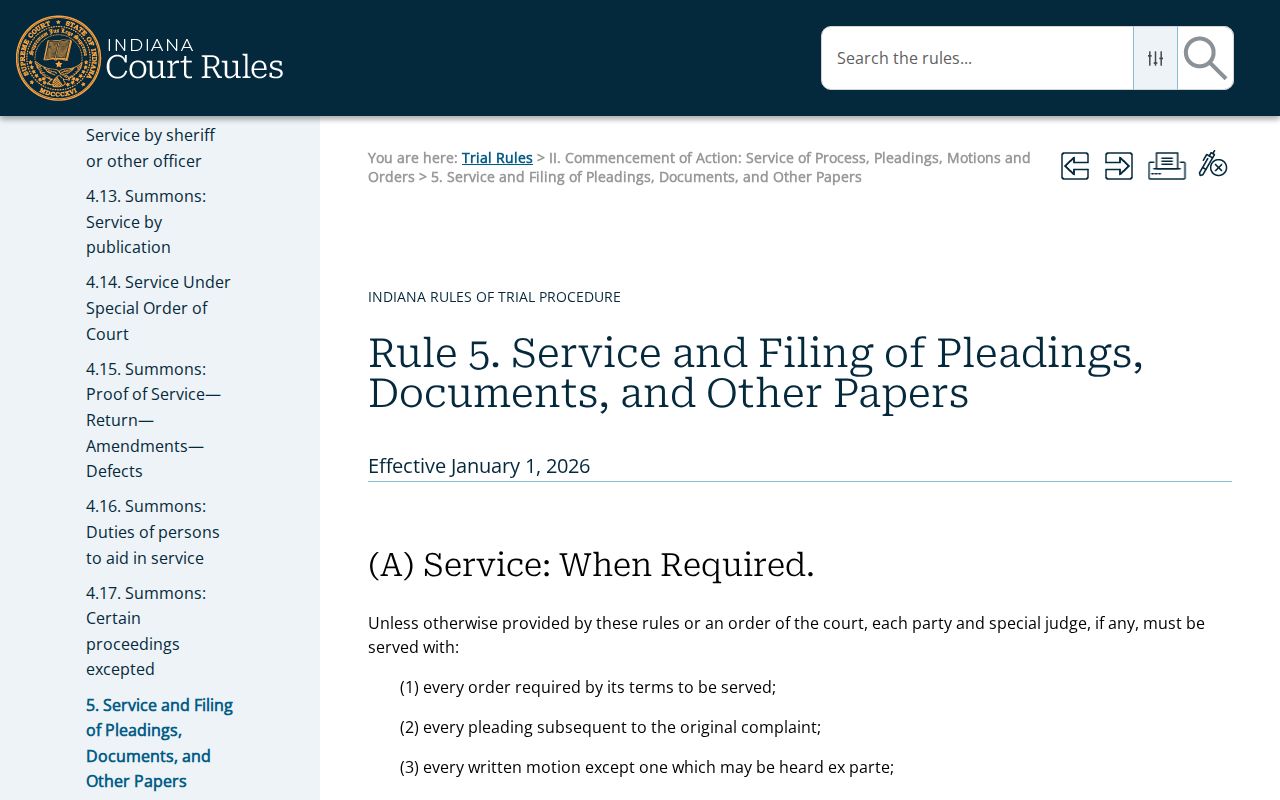
Attorneys file through a certified e-filing provider. Self-represented filers may use Hancock's in-person, mail, or fax channels in stated circumstances; email filing is not accepted. Whether the public sees the filing on MyCase is a separate access question.
Civil Docket Settings and Hearings
In Hancock County, the court builds the civil calendar. The Clerk does not. A CCS entry may list a hearing, mediation, trial, or another setting, but a written notice or a direct instruction from the court wins if anything conflicts. The file date is never the hearing date, so do not treat it that way.
Want a continuance? It does not happen by itself. Hancock local rule requires a prompt written, verified motion. It must state specific grounds. It must also say whether the other parties consent or object. When practical, counsel should hand the court a rescheduling date that opposing counsel can accept. Until the court grants relief, the current setting still stands.
Date questions go to the assigned court. Call Circuit at 317-477-1107, Superior 1 at 317-477-1148, or Superior 2 at 317-477-1115. The wider Hancock County court dates resource helps you sort judicial settings from county events.
Hancock Daily Docket Access
Administrative Rule 9 puts a duty on trial courts. They must make daily calendars or dockets available in electronic or other form, with basic scheduling fields included. Nothing in the rule promises a single statewide calendar page broken out room by room. The Administrative Rule 9 text spells this out.
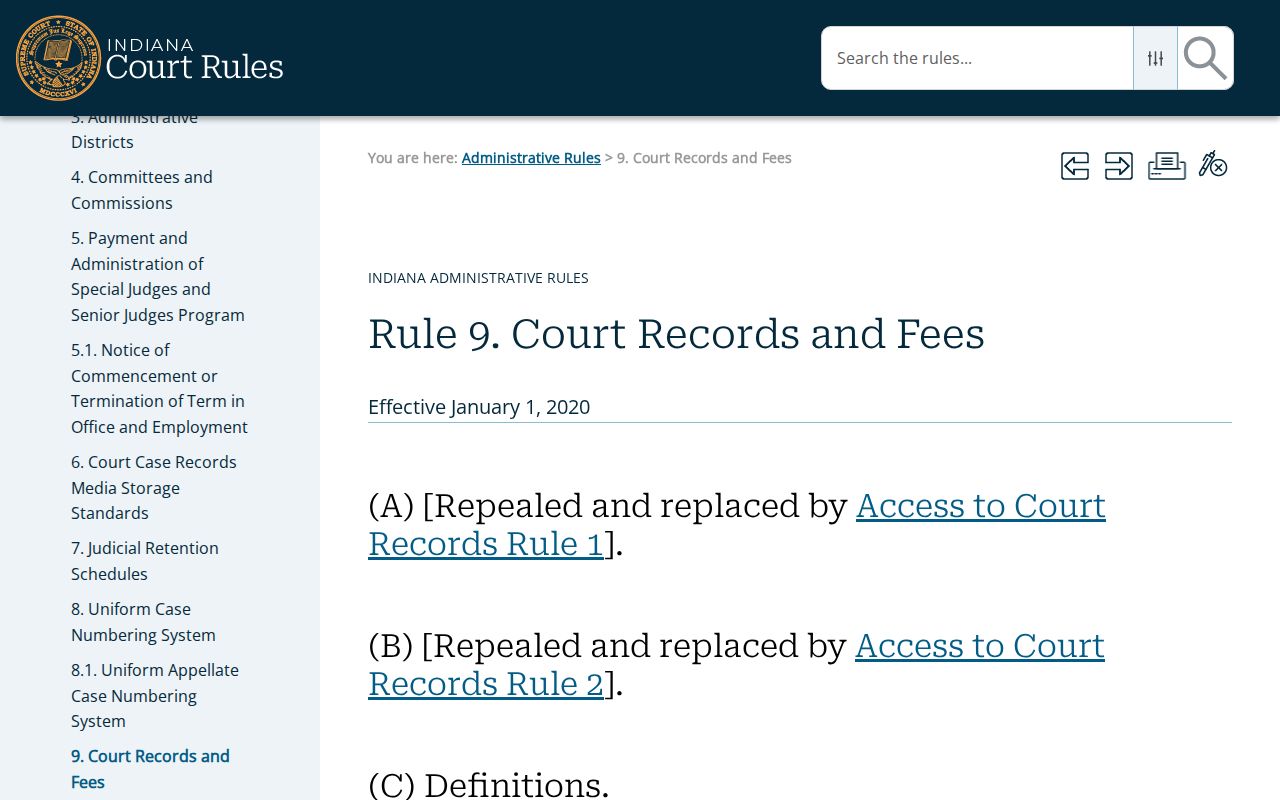
For Hancock civil matters, lean on the case summary, the current notice, the assigned court, and the Clerk. The county's general web calendar is not a judicial docket, so do not rely on it for court records.
Civil Docket Access Rules
Many routine civil headers and orders are public, but availability still turns on the case code, the audience, the rule, and the case order. Ordinary MyCase suppresses the names in protection-order cases. Juvenile files and some paternity material stay restricted. Probate inventories, family filings, and exhibits may be withheld from remote access even inside a public case.
Need a public item that is not linked?
Give the Hancock County Clerk the cause number and describe the document with reasonable particularity. Ask about page count, plain or certified form, payment, and delivery.
Hancock charges $1 per page for copies. Microfilm runs $1 per page too, and certification adds $3. A mailed request needs the form, a money order, and a self-addressed stamped envelope. Party-only files call for the identity method the county states. If a record is excluded, Access Rule 9 may help. You can petition the court for it under that rule.